Click here to chat with me!
Search our website now



By Kathleen Choe and Bettina Shultz-Jobe
Horses are always watching—not necessarily in a vigilant or guarded way—but in the way animals are designed to orient toward relationship, movement, and subtle shifts in their environment. They notice tone; they notice posture; and most importantly, they notice how energy rises and falls between beings.
A research study conducted in Germany explored whether horses learn not only from direct interaction, but also from observing human relationships that are not directed toward them.
They were trying to answer the following three questions:
In this study, seventeen horses were given access to two buckets of food, one blue and one yellow. After they became comfortable eating from both, two humans approached the buckets within the horses’ view.
One bucket was paired with gentle approval. When a person ate from that bucket, another responded warmly with kind words and supportive gestures. The other bucket was paired with visible disapproval. When someone reached into it, the second person responded with sharp gestures and a harsh tone until the carrot was returned.
Over time, twelve of the seventeen horses began to prefer the bucket associated with approval. Even when the humans were no longer present, that preference remained. The horses had taken in the social information around them and adapted their behavior accordingly.
One of the most meaningful findings was not about age, rank, or sex. Those variables did not predict learning outcomes. What mattered most was housing.
Horses who lived in social groups were significantly more influenced by the observed human interactions than horses kept in individual stalls. The horses who experienced regular contact within their own species appeared more capable of using social cues from another species.
This aligns with what neuroscience has been teaching us for decades. Brains develop and organize in relationships. Neural pathways that support flexibility, integration, and adaptive learning are strengthened through safe and consistent social contact.
In other words, when social needs are compromised, the nervous system narrows, cognitive flexibility decreases, and the ability to interpret and integrate new information shifts.
One of the most powerful inferences from this research is this: horses are not only responding to how we treat them. They are responding to how we treat one another.
Think of a human classroom setting. If a teacher is unkind or dismissive toward one student, it does not only affect that single relationship. Because every other student is watching, trust and safety begin to shift collectively.
The same appears to be true for horses. The research suggests they are learning not only from direct interactions with them, but from the interactions unfolding around them. If, for example, I am tense, harsh, or disrespectful toward someone else in the space, that tone does not disappear when I turn toward the horse. The horse has already registered it.
The energy we hold toward another person influences the relational field that also influences the horse.
What continues to emerge in equine research is a consistent message: horses are sentient beings. They think. They interpret. They make choices. They develop preferences.
When we work with them, we immerse ourselves in an ongoing process of de-objectifying them. They are not tools, and they are certainly not robots. They are not interchangeable instruments in a therapeutic model. They are relational beings participating in shared environments.
This study adds to the growing body of evidence that horses possess sophisticated social cognition. They do not just react passively; they observe patterns and adjust their behavior accordingly.
Social learning theory, developed by Albert Bandura, suggests that humans learn by observing others. We internalize tone, posture, and consequence long before we consciously analyze what we are seeing. We absorb patterns of approval and disapproval. We learn what brings connection and what threatens it.
Children, especially, are learning in this way from the very beginning. They are not born with an understanding of how to navigate relationships. Through repeated interactions, they learn who is safe, who is responsive, and who is not. Their attachment patterns form from these observations and experiences.
We sometimes see this dynamic in adult relationships as well. A person may notice how harshly someone treats others, yet feel reassured because they themselves are treated kindly. Over time, that selective safety often proves unstable, because healthy relationships require us to care about how people treat everyone, not just how they treat us.
Horses appear to learn in a remarkably similar way.
The horses in the study were not being trained through direct reinforcement. They were integrating social information from human-to-human interaction and applying it to their own decisions. Their nervous systems were tracking relational cues and adjusting behavior to align with safety.
For those of us who partner with horses in therapeutic and experiential settings, this research carries important implications.
If social experience within their own species enhances horses’ ability to interpret and respond to relational cues, then housing and herd life are not peripheral considerations. They are central to both welfare and learning.
A horse who has access to safe, consistent social connection within a herd is likely to have greater nervous system flexibility. That flexibility supports curiosity, adaptability, and engagement across species boundaries.
And if horses are watching how we treat each other, then our culture matters. The way trainers speak to staff, the way facilitators respond to mistakes, or the way disagreements are handled — all of it becomes part of the environment the horse is learning from.
When we ask horses to participate in healing work, we are inviting them into deeply relational processes. Their capacity to engage is directly influenced by whether their own attachment needs are being met.
Isolation affects humans in ways that mirror what we see in horses. When attachment needs are unmet, the nervous system organizes around protection. Attention narrows, then learning becomes more rigid. New information is filtered through survival-based expectations.
Many of the clients who enter our pastures carry relational histories that shaped how their nervous systems learned to protect them. They learned, often implicitly, which behaviors brought approval and which brought rejection. They learned how to stay connected, how to withdraw, or how to manage intensity in order to preserve some measure of safety.
Just as the horses in the study observed and adapted, humans do the same.
The difference is that humans also carry the cognitive awareness of these patterns, which can make the process of change feel both possible and vulnerable.
At Natural Lifemanship, we understand that healing unfolds through secure, connected relationships. The horse is not simply a tool or a technique, but a relational partner whose own nervous system participates in the process.
When horses are socially connected and regulated within their herd, they bring that regulation into the therapeutic space. When facilitators are grounded and attuned, they model safety and responsiveness. Clients are then able to experience something different from what their nervous systems may have come to expect.
The study on social learning in horses reminds us that what unfolds between beings matters. The tone we use with one another matters. The way we repair disconnection matters. The relational ecosystem surrounding the work matters.
When we prioritize secure attachment, attunement, and social wellbeing for both humans and horses, we create the conditions where learning becomes integrated rather than forced.
Healing does not begin with technique. It begins with relationship.
If this conversation resonates with you, we invite you to continue exploring the relational foundations of this work. Whether through our Fundamentals training, the Intensive, or our attachment-based specialty courses, we go deeper into what it truly means to create environments where both humans and horses can think clearly, feel safely, and choose connection.
The work begins long before we pick up a lead rope. It begins in how we show up with one another.
We would be honored to continue the conversation with you.

“Walk the walk, don’t just talk the talk”
“Practice what you preach”
“Say what you mean and mean what you say”
“Actions speak louder than words”
“Put your money where your mouth is”
Idioms about the importance of being congruent in both speech and behavior abound.
Our spoken words, no matter how sincerely we mean them, become untrustworthy when they are not supported by our actions.
Similarly, our actions feel incongruent and insincere when they are not consistent with our intention and motives. We have all been on the receiving end of an interaction that appeared or seemed intended to be helpful or friendly, but instead felt empty at best and manipulative or exploitative at worst. Both our actions and our words, no matter how well intentioned, can leave us feeling confused and disconnected from each other if they are not congruent with our internal state of being, and can result in relational rupture.
Webster’s Dictionary defines the word “embody” in this way: to be an expression of or give a tangible or visible form to (an idea, quality, or feeling).
Embodiment entails a sense of internalizing and integrating a way of being in the world that moves beyond our way of doing or behaving. Beyond acting as guidelines for behavior, embodied principles and beliefs become woven into the fabric of our identity and sense of self, and flow naturally into the ways in which we connect with self and others, both human and animal, and the larger world, including nature and our conceptualization of the divine.
We can sense the difference when someone is “acting kind” as opposed to “being kind.” Kind acts can be done for a variety of both honorable or self-serving motives. However, experiencing true kindness from someone who embodies the truth of their character in serving and caring for others because this is who they are engages our limbic system in an entirely different way and offers a rich relational opportunity for connection on a level so deep and healing that it is felt at a cellular level.
This kind of connection requires genuine presence, being in this moment and being with yourself and the one who is in front of you. We try in various ways to derive “being” from “doing,” but “doing” actually flows from our “being.”
WHO we are shows up in WHAT we do and HOW we do it.
In our task-focused, accomplishment-driven society, our obsession with productivity and output leaves little room for the rich, satisfying, deeply healing experiences of connection that are only possible when we slow down and focus our complete attention on this interaction at this moment with this being, whether horse or human.
When I work with a client in the round pen who is asking for their horse’s attention while preoccupied with the outcome, so focused on the task of getting the horse to look at them, or turn and walk to them that they have reduced the interaction to a project whose success is measured by achieving a certain behavior, the principle of embodied connection is completely lost in the transactional nature of this exchange.
When the client shifts to a more genuine, present state, connecting with their deep longing to be seen and felt and valued, and sees and feels and values their horse as well, the change in energy is palpable. The quality and depth of the connection available in this type of relational exchange defies language, as it is felt on a somatic level between the two as an energetic exchange.
As a trauma survivor, I learned to “behave” appropriately in relational interactions by accurately assessing expectations and how to meet them in order to avoid rejection and abandonment. When I was first introduced to the Natural Lifemanship model of Trauma Focused Equine Assisted Psychotherapy, I approached it the way I did everything I wanted to learn about: in a cognitive manner. I studied the model, memorized the principles and then practiced applying them in the round pen with horses in a task-focused, outcome driven way.
It soon became clear to me that I could ask a horse to attach and detach from me without any true connection whatsoever. I did not feel the warmth in my chest, or energetic exchange between myself and my horse that other people described when their horse connected with them. I spent hours in the round pen practicing making requests for interaction and felt despair about ever moving beyond the behavioral stage of it “looking right” without it ever “feeling right.”
Then I took the Natural Lifemanship Intensive Training, which focuses even more on embodying the relational principles of this model. I learned that the healing work we do with humans and horses is a way of “being” in the world, not only a way of “doing.” Embodiment requires breathing and processing space, which is why Natural Lifemanship trainings are designed in a combined video and live learning format that offers not only plenty of time to learn and master essential principles but also skilled and knowledgeable instructors to guide your learning by giving personalized feedback on the specific ways to practice these principles.
To read more about my experiences early on with Natural Lifemanship read here.
Malcolm Gladwell popularized the “10,000 hour rule” in his book, Outliers, based on a research study that found it takes about 10,000 hours of intensive practice to achieve mastery of complex skills and materials like playing the violin or learning computer programming. A surprising nuance in this discovery revealed that it is not simply the amount of hours spent practicing but how you practice and who guides you in deciding what to focus on during that practice time that determines the level of success achieved. This idea of “deliberate practice” under the guidance of a skilled teacher who is able to assess each student individually and outline specific steps to help them improve then tailors the time spent to focus on what would be most helpful for that student’s growth and development.
How you use your practice time and who guides you is what matters most.
I spent hours in the round pen doing the same thing over and over, getting the same results, until I received the personalized attention and guidance I specifically needed to let go of my task driven focus and learned to embrace and embody the principles and nuances of true, heart-felt connection. I discovered the power of presence from trainers who embodied this with and for me so I could hone in on what was missing in my learning and start practicing in a way that actually led to transformational change.
The Intensive Training is set up to enhance your learning with guidance and support specifically tailored to the areas you want and need to grow. It helped me refine my understanding of connection in relationship and led to powerful shifts in my perspective on my relationship with self and others, both horse and human.
This is a powerful opportunity to take the next step in your journey of personal and professional growth!
To practice feeling a sense of embodiment through connection, try taking a walk with a trusted person. Orient to your environment and do some mindfulness and grounding to become fully present in your body as you walk beside each other. Then start to notice if you can fall “in sync” with your partner, matching their stride by sensing their movement without looking at them.
Take turns lengthening your stride, speeding up and slowing down, and changing direction. Can you feel these shifts without looking at your partner’s legs or body with your eyes? Can you sense the energetic exchange between the two of you as you become entrained in your motion and your connection deepens through this rhythmic shared movement? Be playful with it! You can also try this with your horse or dog.
Want to learn more? Attend our upcoming webinar on embodiment and sign up for the Natural Lifemanship Intensive Training! Keep growing and learning with us.
We look forward to seeing you!

Our current world is confusing, conflicted, and chaotic, to say the least. Images of peaceful protests marred by violence, looting, and clashes with police, continued uncertainty about the true nature and dangers of COVID, economic worries, and a myriad of other accompanying concerns have left us exhausted, overwhelmed, and emotionally devastated. We are feeling the collective strain of too many traumatic stressors coming at once, exceeding our window of tolerance and capacity to cope with our existing strategies.
In the absence of clear leadership and guidance on how to respond to these crises, many of us are experiencing the phenomenon therapists refer to as “regression,” or the emergence of the inner child we all carry within us. Even an essentially stable, relatively healthy childhood involves numerous hurts and rejections common to growing up (think: middle school) and leaves us with some wounded younger parts that we carry into adulthood. Childhood trauma can leave us with younger parts that are literally frozen in pain and fear. These tender selves are activated during times when our adult selves feel helpless, hopeless, confused, insecure, or lost.
They essentially need to be “re-parented” with acceptance, kindness, grace, and patience and integrated into our adult self through this healing process. This happens in the context of healthy, predictable, safe, connected relationships with others, where younger parts are assured they will not be abandoned or abused as they were in the past.
New neural pathways for security and trust are built when we experience a different and positive outcome in a relational context, such as being understood and accepted instead of shamed and rejected when we share a struggle or hurt with another person. Relational safety allows our younger parts to heal and “grow up” into psychological maturity. An important element of the therapeutic process is creating a safe and stable alliance between the therapist and client (and horse in EAP) so that these wounded parts can progress through the developmental stages that were missed due to the survival strategies we get stuck in when growing up in unsafe environments.
The “life jackets” we don in childhood can become the “straitjackets” of our adulthood.
If you are struggling with feeling lost about what to say or how to feel or act in the current polarized climate, try to notice that feeling without judging, minimizing, avoiding, or acting on it. Make some space for the discomfort, the uncertainty, the distress. Notice if any of these feelings connect with territory familiar to your childhood, to see if your younger parts are being triggered.
Our deepest desire is to be fully known and fully accepted, and our greatest fear is that if we are fully known, we will not be accepted. We all have “shadow sides” that we are afraid to acknowledge. Many of us struggle to give voice to our wounded younger parts. I struggle alongside you to find the right way forward during these confusing times. No matter what the color of our skin, the same heart beats underneath. We all need to be accepted, valued, and loved.
To learn more about Inner Child Work sign up for our conference Interconnected 2020 and attend the following workshops:
Regression and the Inner Child
Equine Connected Eye Movement Desensitization and Reprocessing (EC-EMDR) and Inner Child Work
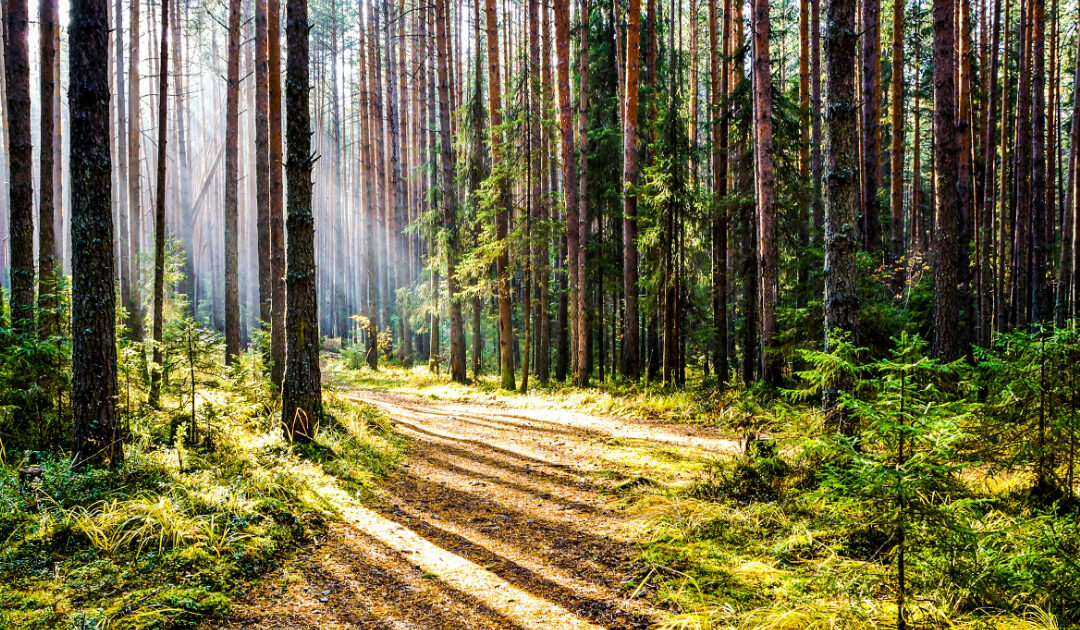
One of my now-favorite yoga instructors leads her students through a series of poses several times at the beginning of each class, both by demonstration and verbal cueing, and then falls silent as she continues to move through the sequence without calling out the poses as we go forward. At intervals, she reminds us, “Trust your body. You know the way.”
At first, I would become confused about which pose to do next without her spoken directions, and found myself constantly checking to see if I was doing the same pose as she was (which sometimes involved awkwardly craning my neck and twisting my body to observe her next move. Yes, I did fall over a few times. This is less painful than falling off a horse but no less embarrassing). Over time, however, I began to trust my muscle memory, realizing that after a few passes through the sequence, my body truly did “know the way.” I could close my eyes and allow myself to flow through the series from one pose to the next without having to constantly glance over at the instructor.
I also accepted that sometimes I was out of sequence or off the pace but that this really didn’t matter so long as I was matching my breath to my movements and staying centered and grounded in my own practice of being mindfully present in my own body and in my own space on my yoga mat.
Something about this phrase “you know the way,” caught my attention early on and kept me coming back to her class despite the initial awkwardness involved in her lack of cueing (I am a rule follower and want to “get things right.”)
As a young immigrant with Dutch parents, I often found myself ignorant of the customs, idioms, and cultural knowledge that my American peers took for granted. Halloween was a mystery (but a fun one. Who can beat the combination of costumes and candy?) We opened presents on the 5th of December (Sinterklaas) instead of the 25th. We put mayonnaise on our French Fries and chocolate sprinkles on our sandwiches (both are delicious, by the way). I often found myself looking around to see how others were behaving, speaking, or dressing to try to fit in and not inadvertently relegate myself to social Siberia.
In other words, I did not learn to trust myself to “know the way.” Developing an eating disorder early in life further disrupted my ability to listen to and trust my body or my brain. It has taken me years of healing and recovery to discover that I can know what I need and want and have enough value to take steps to seek for those needs and wants to be met.
Many of us are finding that we currently do not “know the way” forward due to conflicting information and differing opinions on how and even whether to re-open the economy and resume activities previously banned due to the coronavirus restrictions. People are passionately divided over how to best pursue safety and sanity during these uncertain times. The news coverage is full of angry confrontations between those with conflicting belief systems. The confusion, chaos, and lack of clear direction can lead us to feelings of overwhelm, hopelessness, powerless, and even despair. No matter where you land in this ongoing debate about the collective good vs. individual rights and freedoms, however, there are certain principles that can help us “know the way” during this challenging time:
Compassion for ourselves and others. Chronic stress can overwhelm our coping mechanisms and cause us to behave and speak in ways we normally wouldn’t. Be quick to apologize and quick to forgive both ourselves and others.
Kindness towards ourselves and others. Now, more than ever, we need to have patience and grace as we all struggle to adjust to a new normal that we don’t always understand how to navigate successfully.
Patience towards ourselves and others. Learning new skills and alternate ways of doing tasks takes time. We learn everything new by trial and error, from walking to multiplication to riding a bicycle. We learn more from our mistakes than our successes. Learning to ask for help and to laugh at ourselves can help defuse a potentially frustrating or defeating situation.
Acceptance of ourselves, others, and our new circumstances. Acceptance is sometimes mistaken for liking or wanting or being “ok” with someone or something. Actually, acceptance is simply acknowledging that the current situation “is what it is.” It doesn’t mean we like it or want it that way, just that it is that way. Until we accept that something is currently true, we cannot put any energy or attention towards trying to make any changes, because all of our energy is being channeled into defense mechanisms like denial, or minimization, or avoidance (my three favorites, personally). Only once we accept, or acknowledge a problem, can we begin to consider ways to tackle it and make things better. This extends to accepting ourselves, as we currently are, and others as well. Acceptance is not resignation. It is the beginning of empowerment for change.
I had to learn to stop looking around to see what everyone else was doing in order to fit in. I realized my nervous system was designed to keep me safe and help me make decisions and take actions congruent with my own values, beliefs, needs, and wants. While it is important to consult trusted sources for guidance in areas outside of our area of expertise, is it also important to check in with yourself to see what feels right for your particular wiring, personality, moral compass, and situation, as well as considering your emotional, mental and physical capacity.
Turn off the news, find a quiet place, close your eyes, and check-in with yourself (and your Higher Power if this is part of your belief system). Don’t just look outward. Look inward. You know the way.
Kathleen Choe is an LPC-S and NL Trainer. Learn more with her at the Natural Lifemanship Conference, Interconnected 2020!
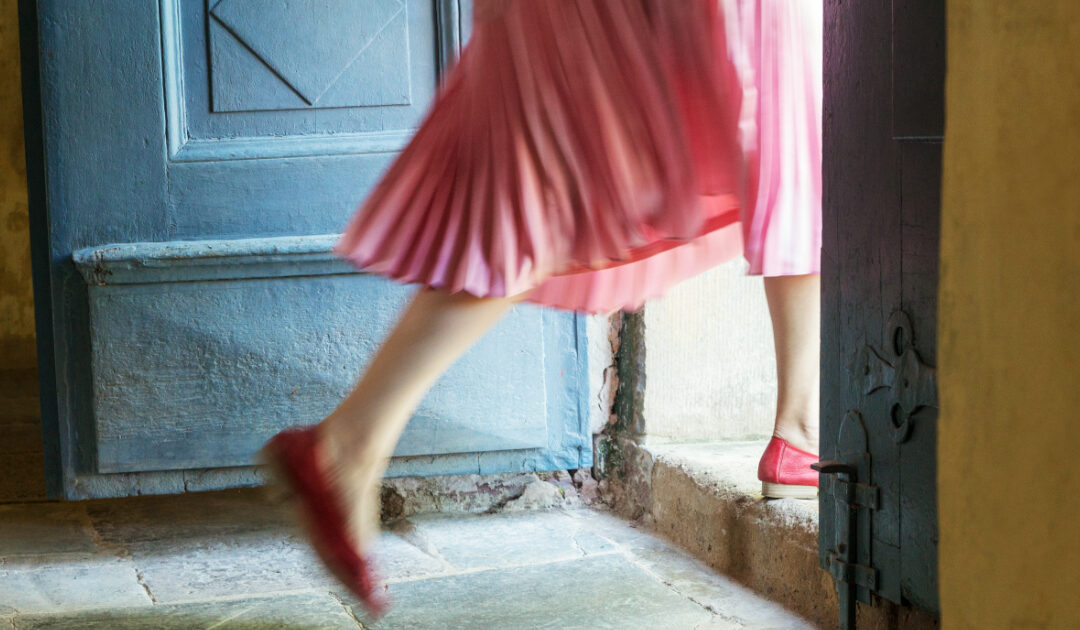
After weeks of seeming stasis, were sheltering in place, physical distancing, online learning, working remotely, wearing masks in public, and other heretofore unheard of phrases and behaviors were becoming the norm, we are receiving conflicting messages about the restrictions lifting, businesses opening (at reduced capacity) and the possibility of life returning to some semblance of “normalcy.” Whether one agrees with the timing or structure of this shift or not, we seem to be on the threshold of tip-toeing out of our homes and into a world that looks vastly different from the one we knew prior to the pandemic.
What does it meant to be “on the threshold?” The word itself has some interesting definitions: a point of entry or beginning; the magnitude or intensity that must be exceeded for a certain reaction, phenomenon, or condition to occur or be manifested; the level at which one starts to feel or react to something or at which something comes into effect.
In other words, a threshold is that moment right before the change actually happens, when we are standing in the doorway looking out at an unfamiliar landscape, wondering if we are prepared for whatever we are about to encounter on the other side. Change is difficult for most of us. Even for those who thrive on adventure and new experiences, feeling a bit of anxiety in the face of uncertainty is common. In that moment when the training wheels come off and we are wobbling this way and that, frantically peddling while trying to adjust to the novelty of trusting our bodies to hold us in balance instead of relying on the machinery of the training wheels or the strong arm of a parent figure holding our bicycle upright from behind, we struggle to have confidence that we can fly instead of falling to the ground. It is the space between the trapeze bars, when we have let go of the one and not yet grasped hold of the other, suspended in mid-air, hoping we have stretched far enough to reach the safety of the handle swinging before us. It is the unknown territory we have not yet traversed, and it is . . . scary.
Brandan J. Robertson, in his article, On the Threshold of Tomorrow, writes, “What are we to do at such a threshold moment? . . . In moments of transition, we are simply to be. We are to pause and acknowledge that a transition is taking place. Instead of seeking to abruptly pass through a threshold, we are to tarry. . . . A new reality is emerging, but we cannot see beyond the threshold. All we know is that we exist in this moment, where everything is in transition. We may experience a new way of being, but we cannot yet sense what it will look like.”
After the end of World War II, all the Dutch citizens living in Indonesia were expelled and sent “home” to their native country, the Netherlands. My mother, along with many of her fellow expats, was born in Indonesia, and up until that point, had never even lived in the Netherlands. At the age of 15, my mother went “home” to a place that was entirely foreign to her. Worse yet, the Dutch citizens already living there did not welcome these returnees back into the fold as terrible shortages of food, fuel, and housing were compounded by the return of these refugees, who were awarded double ration cards due to the starvation and hardship they experienced in the concentration camps during the war. She remembers feeling lost, alone, and afraid in this country where she was supposed to belong but whose customs, climate and conditions were unfamiliar to her. Her mother’s sister, Tante Truce, took in the battered and bedraggled family of five and fed them, cared for them, and helped them over this threshold to adjust to their new life.
It is ok not to know what’s next. It is ok not to know how to feel, what to think, or how to behave in this new landscape we are finding ourselves in. It is ok to ask for help, to turn to each other for connection and comfort, and to find our way forward together, with uncertain, even wobbly steps. We may fall off our bicycle (or horse, as I did last week. Twice!) We may miss the trapeze bar. The important thing is that we allow ourselves to be helped back up by others who are traveling this new road with us and that we don’t try to figure this out alone. We may linger on the threshold and decide we are not quite ready to cross over it yet even though we see others doing so. And that’s ok too.
Because you are not alone. We are all in this together.
Kathleen is a licensed professional counselor and practices in the Austin, Texas area. More info can be found here. She is also a member of the NL team, and a Natural Lifemanship trainer.
The Natural Lifemanship Institute is offering a variety of low to no cost support for you during this time!
Check out these name your price workshops to support you during this time and help to build YOUR resilience.
We offer a variety of resources daily on Facebook and a FB live series called Resilience Through Rhythm every Sunday. Connect with us on Facebook where we are committed to community connection and collective healing.
Survive + Thrive = SurThrive: A Webinar Series for Navigating the Pandemic; these recording are free to NL Basic or Professional Members here. All others can name your price here.
I can help you quickly find what you need on the website. For more complex questions, you can also reach out to our support team.
Click here to chat with me!
Search our website now

Recent Comments